From Reluctant Mover To Daily Adventurer
After introducing simple treasure-hunt routes across the garden, movement became something our child actively requested rather than avoided.

Welcome to a playful editorial framework where movement drives childhood confidence, fluid creativity, fine coordination, and healthy systemic habits naturally.


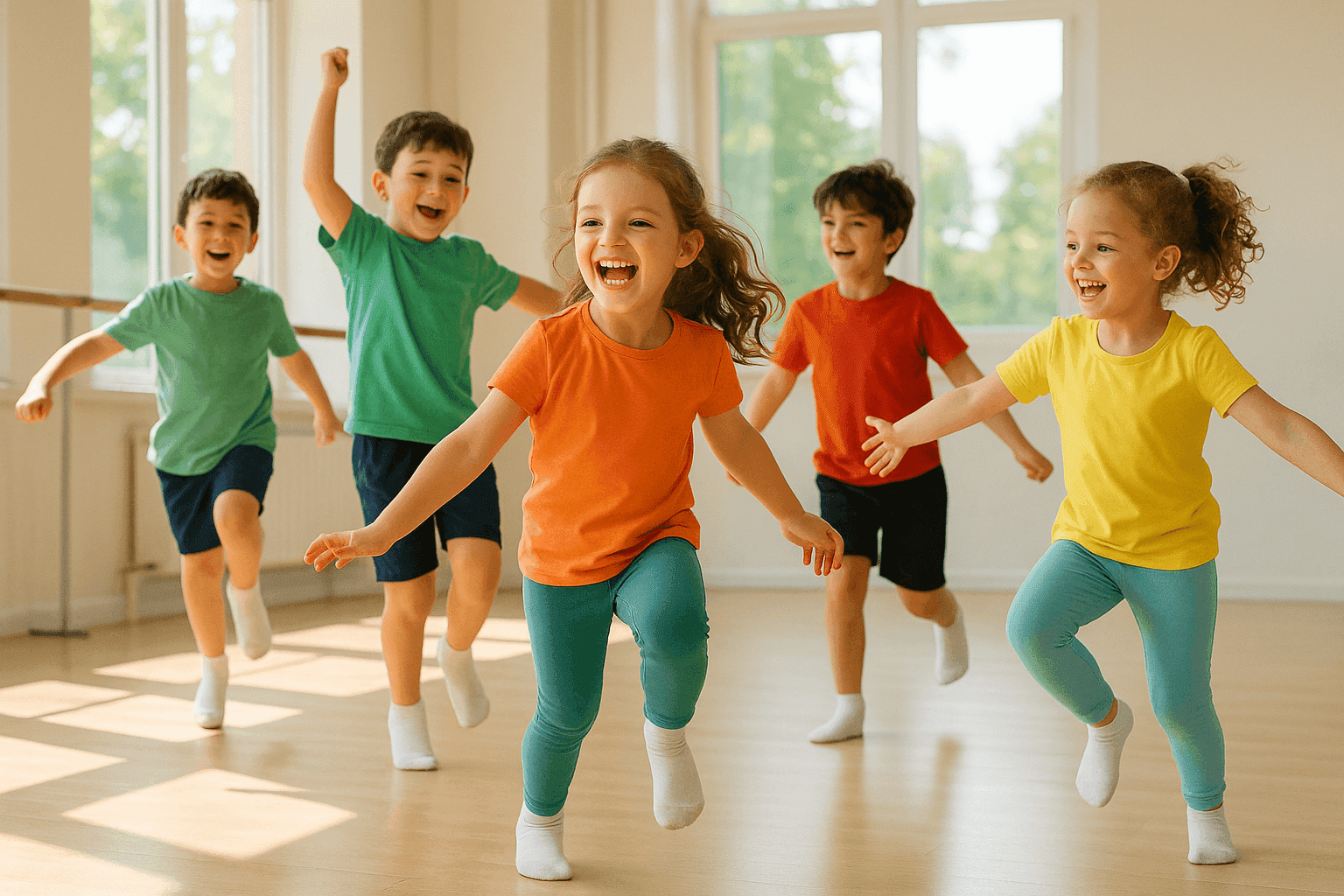
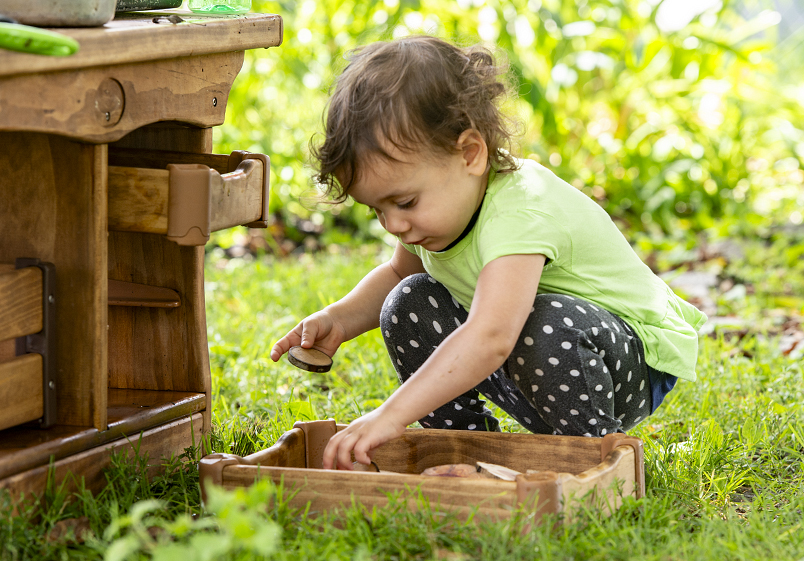
Dynamic movement styles unlock early sensory pathways, establishing stable foundations for robust cognitive development and emotional learning.

Overcoming creative physical maps safely fosters intrinsic self-reliance and cognitive mastery tracks.

Fine-tuning vestibular feedback systems through natural, playful spatial rotation mechanics.

Replacing standard metric exercise tracks with exploratory visual narratives that make movement lifelong fun.
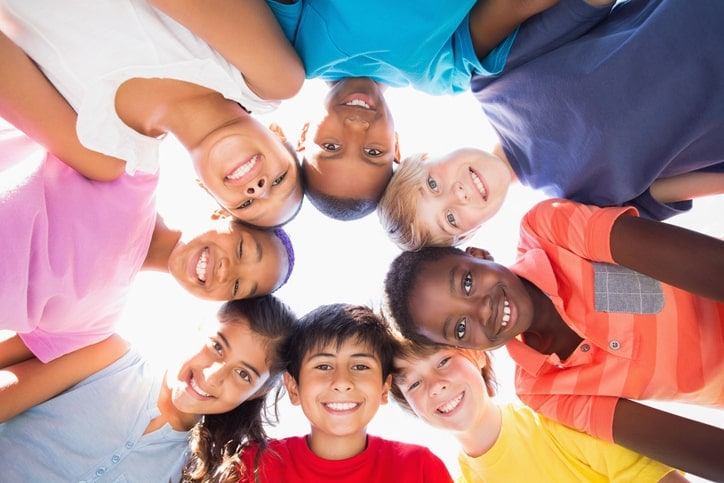
Coordinating complex collaborative missions opens clear communication pathways between family peers.

Imaginative micro-adventures mapped using simple, safe household items and pillow configurations.

Transform outdoor pathways into vibrant, high-energy cognitive marker tracking sequences.

High-tempo coordination mirroring structures designed to encourage individual musicality loops.
Decoding primary stability principles and dynamic multi-directional alignment setups through storytelling maps.
Integrating short active game tracks seamlessly into daily domestic family spaces without pressure.
Uprooting balance constraints by progressively scaling physical challenge vectors safely over time.
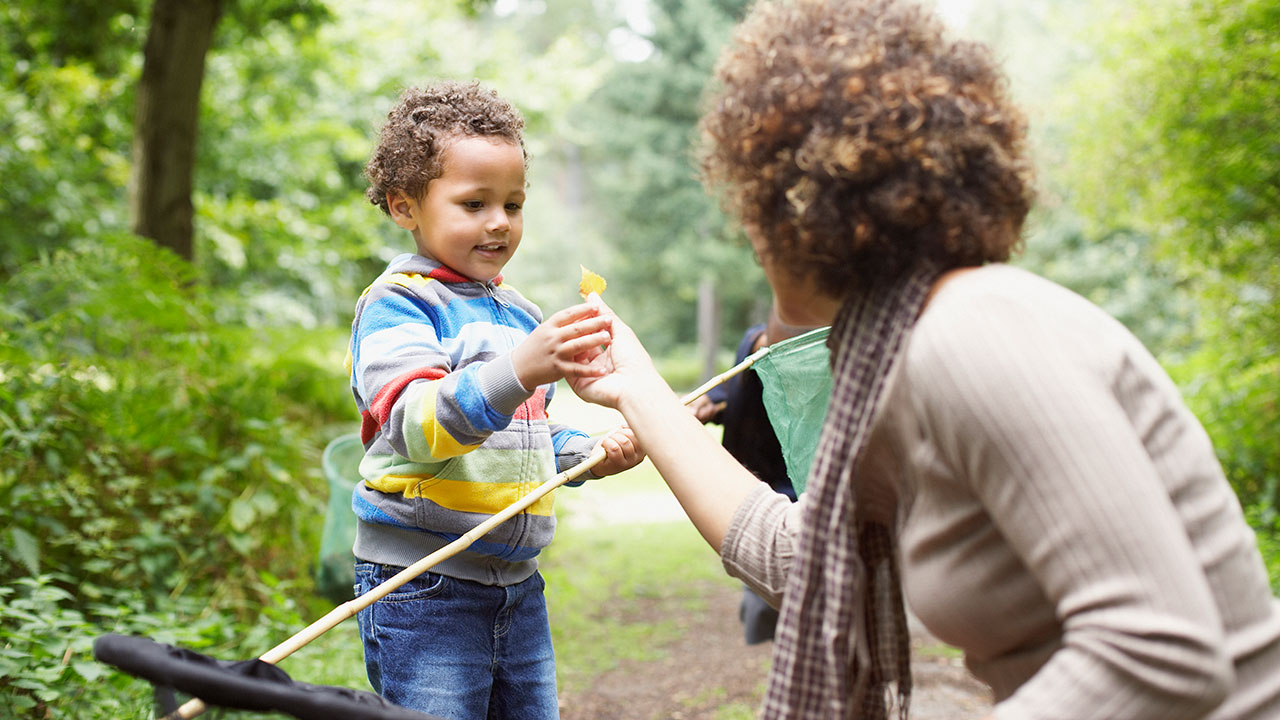
Combining visual puzzle coordinates with high-energy movement intervals across open park terrain.
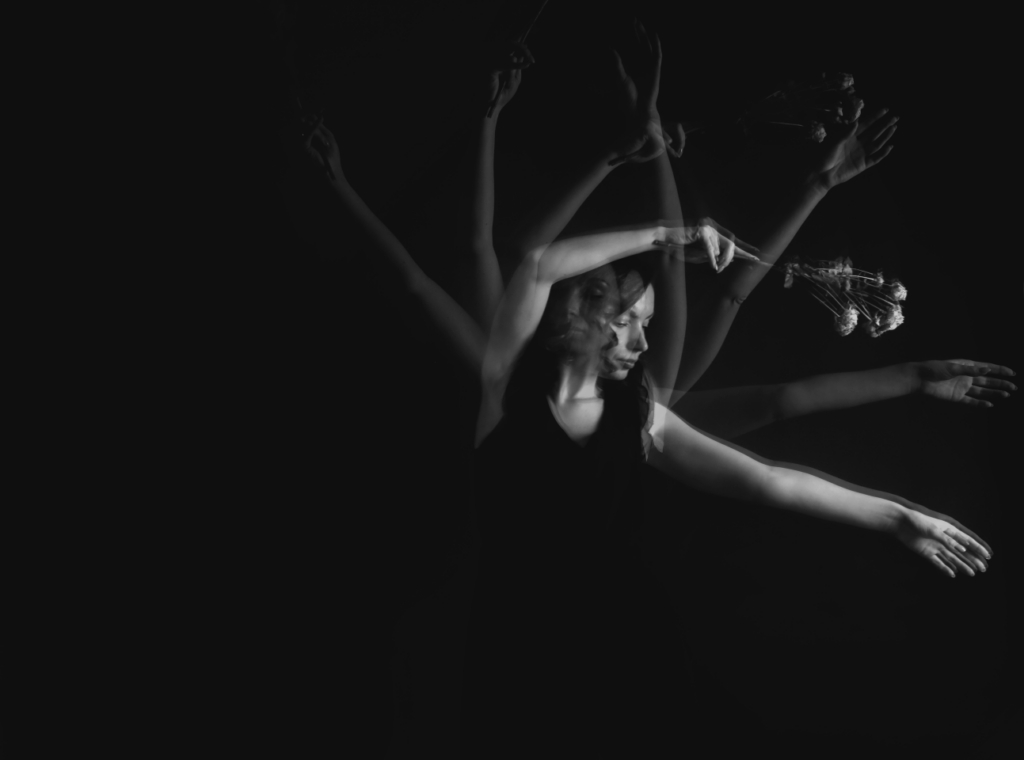
Fostering fast neurological adaptations via physical mirroring maps.

Building core agility habits using home pillows safely.

Gentle deep tissue lengthening templates built purposefully into story arcs for wind-down hours.
Practical pedagogical frameworks targeting screen habits by substitution of energetic tactical indoor search games immediately following scholastic hours.

Blending spatial exploration markers directly with mathematics games.
How managed physical hurdles eliminate fear patterns.
"The narrative-driven blueprints inside this platform transformed our family's weekly routines. Our children no longer associate active play with structured athletics drills."
— The Ramirez Family Archive, Chicago Dispatch


Gain uninhibited access to custom spatial layout options designed to make youth motor development an engaging story.
Join The AdventureImaginative blueprints and play guides optimized across specific home, garden, park, and outdoor exploration environments.
Each movement blueprint is designed around natural childhood curiosity while quietly strengthening balance, coordination, agility, confidence, and spatial awareness.
Transform living rooms into island-hopping balance courses using rugs, cushions, and safe floor markers. Children naturally develop postural control while navigating increasingly complex routes.
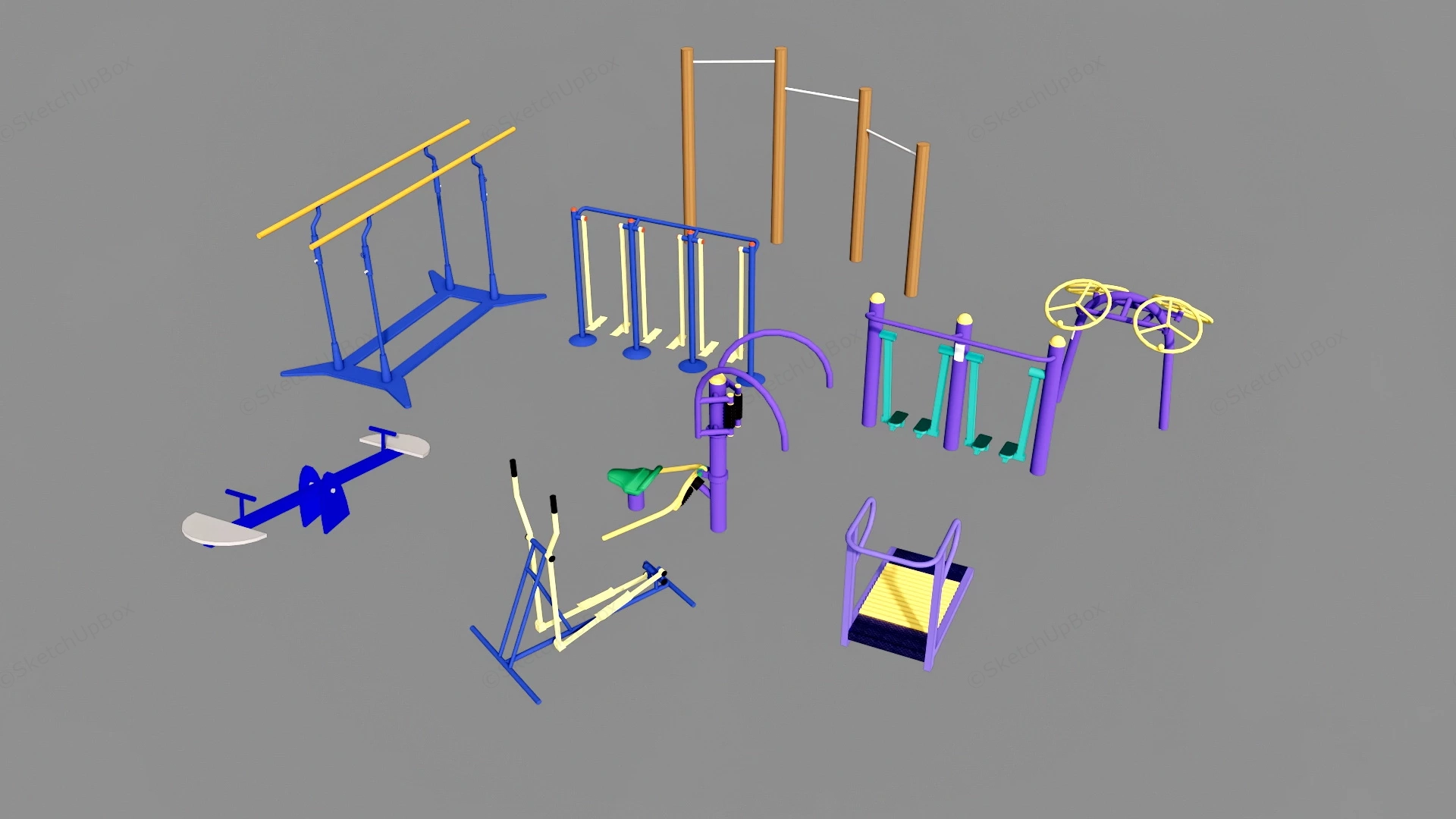
Outdoor navigation missions introducing directional movement, speed variation, crawling passages, object retrieval challenges, and terrain recognition exercises.
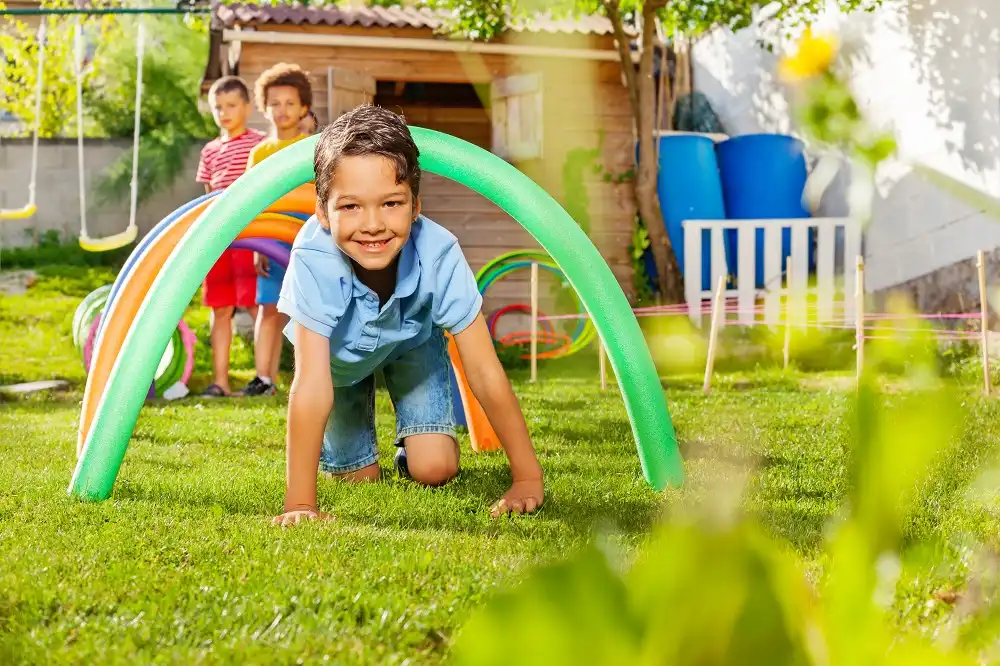
Create adventure routes using cones, ropes, stepping stones, and natural landmarks. Encourages sequencing skills, route planning, and whole-body coordination.
A structured scavenger experience that combines observation tasks, climbing opportunities, directional awareness, and environmental discovery challenges.

Cooperative movement games where children solve challenges while transporting objects, decoding clues, and completing timed physical objectives.
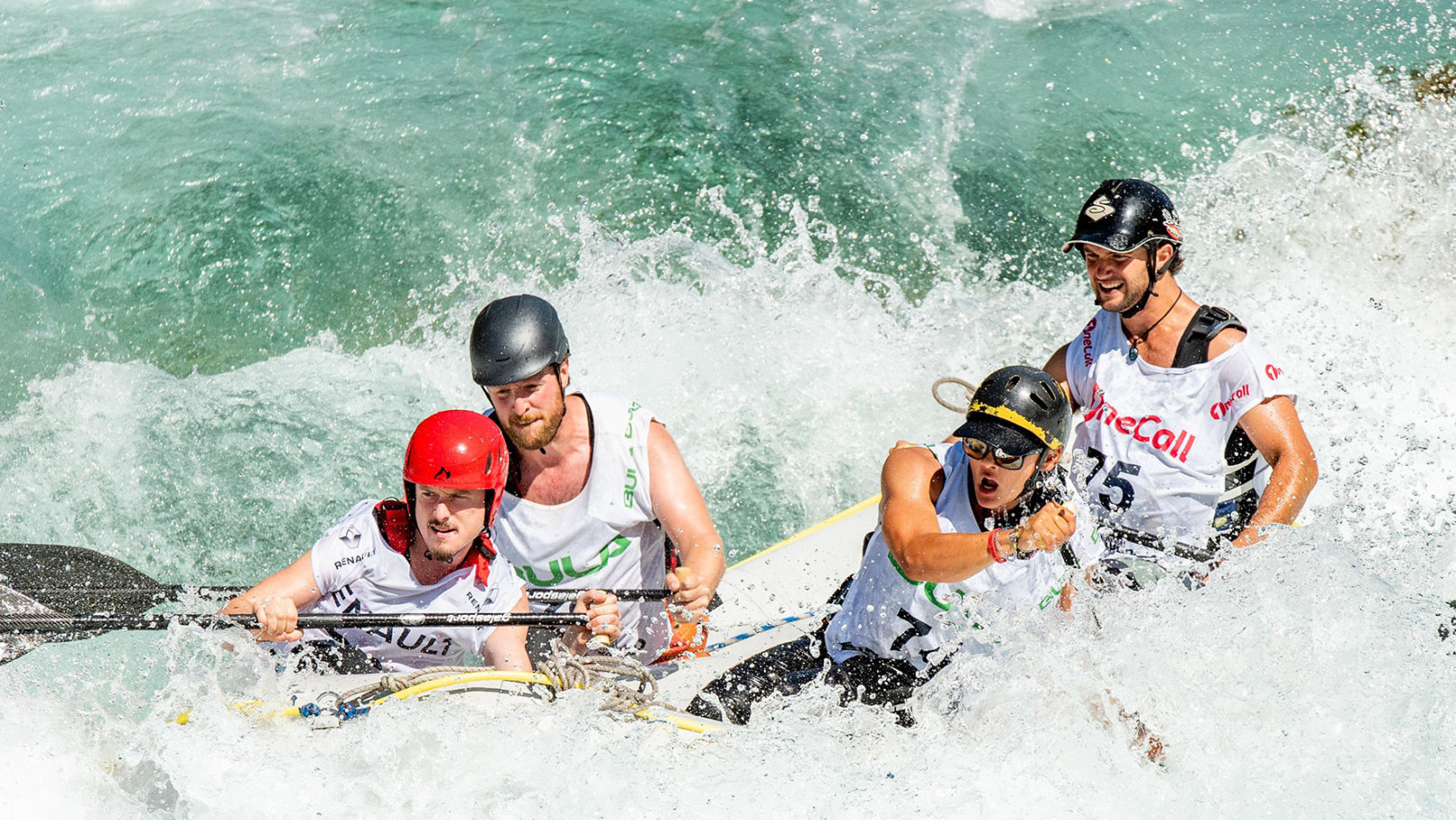
Children create their own movement routes and obstacle maps, learning decision-making, adaptability, and strategic route optimization.
Research consistently demonstrates that children learn movement most effectively when physical challenges are embedded within imaginative narratives. Instead of isolated exercises, the Active Learning Library frames movement as exploration, discovery, adventure, and play.
Each activity collection has been designed to encourage natural repetitions without requiring children to consciously "exercise." Balance, agility, coordination, reaction speed, and confidence emerge organically through engaging experiences.
Flower mapping adventures, sensory treasure hunts, and garden exploration routes designed for active observation.
Extended outdoor movement circuits utilizing parks, playgrounds, and open green spaces.
Leaf collection quests, terrain tracking exercises, and environmental pattern recognition challenges.
Creative home-based obstacle systems optimized for smaller spaces and colder weather conditions.
“Children rarely distinguish between movement and play. The most effective exercise is often the activity they never realize is exercise.”
A comprehensive collection of movement principles, developmental frameworks, environmental activity systems, and practical play strategies designed to support healthy physical growth throughout childhood. Every guide translates movement science into engaging, family-friendly experiences.
Childhood movement is far more than exercise. Every jump, climb, crawl, balance task, throw, catch, and exploratory adventure contributes to the development of neural pathways responsible for coordination, body awareness, confidence, problem solving, and physical literacy.
The most successful movement experiences rarely feel like structured workouts. Instead, they emerge through play, exploration, storytelling, discovery, and curiosity-driven challenges. By combining imagination with purposeful movement, children naturally accumulate the repetitions needed for healthy development.
The following frameworks offer simple systems that parents, teachers, and caregivers can implement across homes, playgrounds, parks, classrooms, and outdoor environments.
Before beginning obstacle courses, relay games, climbing sessions, balance activities, or exploration adventures, children benefit from a brief movement preparation sequence. This framework increases circulation, improves body awareness, and prepares joints for larger movement patterns.
Encourage children to reach toward the sky while standing tall on their toes. This activates postural muscles and introduces balance awareness.
Gentle forward hinges develop mobility and improve body-control during bending and lifting activities.
Touching opposite knees, shoulders, and ankles develops bilateral coordination and movement planning.
Bear crawls, frog jumps, crab walks, and penguin waddles activate multiple movement systems simultaneously.
Skipping, hopping, jogging, and side-stepping prepare the cardiovascular system for larger activity sessions.
Balance serves as a foundational skill supporting nearly every movement challenge. Rather than introducing advanced balance exercises immediately, children benefit from gradual progression across increasingly dynamic environments.
Wide-base standing activities and static positioning.
Straight pathway walking using tape lines and floor markers.
Direction changes, turns, and obstacle avoidance tasks.
Dynamic single-leg stability and controlled transitions.
Strength development during childhood should emerge naturally through exploration and play rather than repetitive exercise. Activities that require pushing, pulling, carrying, climbing, and crawling build resilient movement foundations.
Moving lightweight objects, scooters, and carts.
Rope activities and partner movement challenges.
Transporting toys, buckets, and adventure supplies.
Playground structures, hills, and safe climbing zones.
Outdoor environments naturally challenge coordination, balance, reaction speed, and adaptability. Uneven surfaces, changing weather, and varied terrain provide richer movement experiences than predictable indoor environments.
Exploration transforms exercise into discovery.
Encourage children to navigate trails, identify landmarks, build nature collections, complete scavenger hunts, and participate in imaginative exploration missions.
Cross-pattern movements help connect the left and right sides of the body. Activities involving alternating arm and leg actions improve rhythm, timing, and whole-body coordination.
Develops timing, rhythm, and lower-body coordination.
Reinforces alternating movement mechanics.
Encourages communication across body systems.
Improves sequencing and movement planning.
Exploration, crawling, climbing, balance, and sensory movement experiences.
Coordination, hopping, skipping, obstacle courses, and movement confidence.
Team games, strategy movement challenges, and dynamic agility development.
Advanced coordination, endurance, leadership, and complex movement systems.
“Movement is the language through which children first learn about their bodies, their environment, and their place within the world.”
Bridging modern developmental science with practical household routines, helping families create environments where movement, curiosity, confidence, and learning grow together.
The Parents Journal explores the intersection between childhood movement, cognitive development, emotional resilience, and everyday family life. Each article translates complex research into practical ideas parents can immediately implement.
Emerging developmental research suggests that balance-rich environments engage neural systems involved in attention, spatial reasoning, and executive function. Activities such as hopping, beam walking, and dynamic balance games may support cognitive processes far beyond physical movement.
Read Article →Small stumbles, missed jumps, and failed attempts often provide valuable information that children use to refine coordination and problem-solving abilities. Learning through manageable mistakes builds adaptability.
Read Article →While organized activities offer important benefits, children often acquire their most creative movement solutions through free exploration, self-directed games, and imaginative outdoor adventures.
Read Article →Fundamental movement patterns continue supporting coordination and body awareness long after early childhood. Revisiting these activities strengthens functional movement foundations.
Read Article →Small environmental adjustments can naturally encourage movement throughout the day. Active homes often produce active children without requiring strict exercise plans.
Read Article →Confidence develops gradually through repeated exposure to manageable challenges. Children become resilient by navigating uncertainty, not avoiding it.
Read Article →Long before children communicate through complex vocabulary, they learn through movement. Every climb, reach, jump, crawl, and balance adjustment serves as a conversation between the body and the environment.
Understanding movement as a learning system rather than merely physical activity changes how we design homes, schools, playgrounds, and daily routines.
Frequent movement breaks may improve concentration during cognitively demanding tasks.
Diverse natural environments expose children to highly varied movement challenges.
Risk-managed play encourages adaptive decision-making and confidence development.
Bilateral movement activities help strengthen whole-body integration.
“The goal is not to raise children who avoid challenges, but children who know how to navigate them.”
Real-world stories, observations, movement milestones, and practical insights contributed by families, educators, caregivers, and community leaders from around the world.
Every family creates its own unique movement culture. Some discover confidence through outdoor adventures, while others transform ordinary living rooms into imaginative obstacle worlds. These chronicles capture the practical experiences behind active childhoods.
“By following the Wilderness Cartography framework, our nine-year-old completely reframed her spatial awareness skills. The storytelling element eliminated performance pressure and transformed every activity into an adventure.”
After introducing simple treasure-hunt routes across the garden, movement became something our child actively requested rather than avoided.
Weekly balance pathways encouraged persistence and gradually increased willingness to attempt new physical challenges.
Instead of structured workouts, our family adopted themed exploration games that naturally increased activity levels.
Combining observation challenges with navigation games dramatically increased curiosity and environmental awareness.
Teachers integrated movement missions and cooperative challenges into break periods, encouraging wider participation.
Simple cushions, tape pathways, and storytelling prompts transformed an unused room into a daily movement space.
Children become more willing to attempt unfamiliar challenges and movement tasks.
Activity periods naturally extend as movement becomes enjoyable rather than prescribed.
Families frequently observe smoother movement and greater body awareness.
Exploration-based activities encourage strategic thinking and adaptability.
“The most meaningful outcomes were never measured by speed, distance, or performance. They appeared in confidence, curiosity, resilience, and joy.”
“Our daughter now creates her own adventure routes every weekend.”
“The balance activities unexpectedly improved confidence in other areas of life.”
“Movement stopped feeling like exercise and started feeling like exploration.”
“The storytelling approach completely changed how our family thinks about activity.”
We believe movement should feel like exploration, imagination, and discovery—not repetition, pressure, or performance.
getyogaclass operates at the intersection of childhood development, movement science, creative storytelling, and family-centered learning. Our mission is simple: transform everyday physical activity into meaningful adventures that children genuinely enjoy.
Rather than viewing movement as a separate task, we see it as a natural language through which children learn about themselves and the world around them. Every climb, jump, balance challenge, and exploration journey becomes an opportunity for growth.
Children learn most effectively when movement feels meaningful and enjoyable rather than measured or evaluated.
Curiosity naturally encourages repetition, experimentation, and problem solving.
Capability develops through manageable challenges rather than perfect outcomes.
Physical literacy supports lifelong health, independence, resilience, and wellbeing.
Adults often separate movement, learning, and play into different categories. Children do not. For them, a backyard obstacle course can become a lesson in physics, confidence, creativity, cooperation, and movement all at once.
By embedding developmental objectives inside imaginative experiences, we encourage children to engage deeply without feeling evaluated.
Building confidence across a wide variety of movement experiences.
Encouraging imagination-driven movement and open-ended discovery.
Supporting perseverance through challenge, adaptation, and growth.
Creating experiences that strengthen connection through shared activity.
A child encounters a challenge or opportunity.
They begin experimenting with movement solutions.
Mistakes provide information and feedback.
Skills gradually become more refined and efficient.
“The objective is not simply to raise active children. It is to nurture curious, capable, confident explorers who view movement as a natural part of life.”

Reach out regarding institutional licensing options or editorial print inquiries.
Effective Processing Target Check: June 17, 2026
Your domestic family data integrity serves as our team's structural configuration baseline. This official documentation lists transparently how our digital platform nodes handle systemic profile trackers.
We do not store, catalog, capture, or evaluate specific bodily metric charts, individual fitness milestones, tracking weights, or identifiable childhood physiological performance charts. All media printouts remain conceptual suggestions for family-led implementation steps.
Guardian communications collected through our newsletter dispatch boxes are fully protected by industry-standard encryption filters and isolated entirely from marketing optimization houses.
Effective Processing Target Check: June 17, 2026
Welcome to our educational network. By downloading our custom layout files, motor planning articles, or instructional timeline content, you agree to the regulatory conditions stated below.
The activity formats, indoor puzzle tracks, balancing concepts, and outdoor game blueprints showcased within this publication space are curated purely for creative narrative inspiration. Parents, local instructors, and legal guardians retain singular, absolute oversight obligations concerning workspace cushioning, furniture security clearances, and individual youth stamina bounds.
The specialized documentation elements within this web space do not constitute therapeutic interventions or pediatric medical diagnostic advice. Always coordinate physical progression sets alongside a certified medical specialist.